A bootloader is the foundational software in embedded systems that initializes hardware and loads the main application. In embedded devices like automotive ECUs, industrial PLCs, and IoT gadgets, it enables firmware updates without disrupting operations.
RAPIDSEA's bootloader stands out by supporting secure, efficient updates across the product lifecycle from development to field deployment. It's ideal for domains where downtime is costly, such as vehicles and smart factories. Unlike basic bootloaders, RAPIDSEA integrates advanced protocols and security, making it a one-stop solution for modern embedded bootloader needs.
Key Benefits at a Glance:

In today's software-defined products, embedded devices are no longer static. They evolve continuously through firmware updates, security patches, configuration tuning, and feature enhancements. The bootloader is the first and most critical software component that makes this evolution safe and reliable.
A well-designed bootloader ensures:
RAPIDSEA Bootloader addresses these needs by combining robust flash programming, secure boot mechanisms, and OTA-ready architecture into a single, scalable platform.

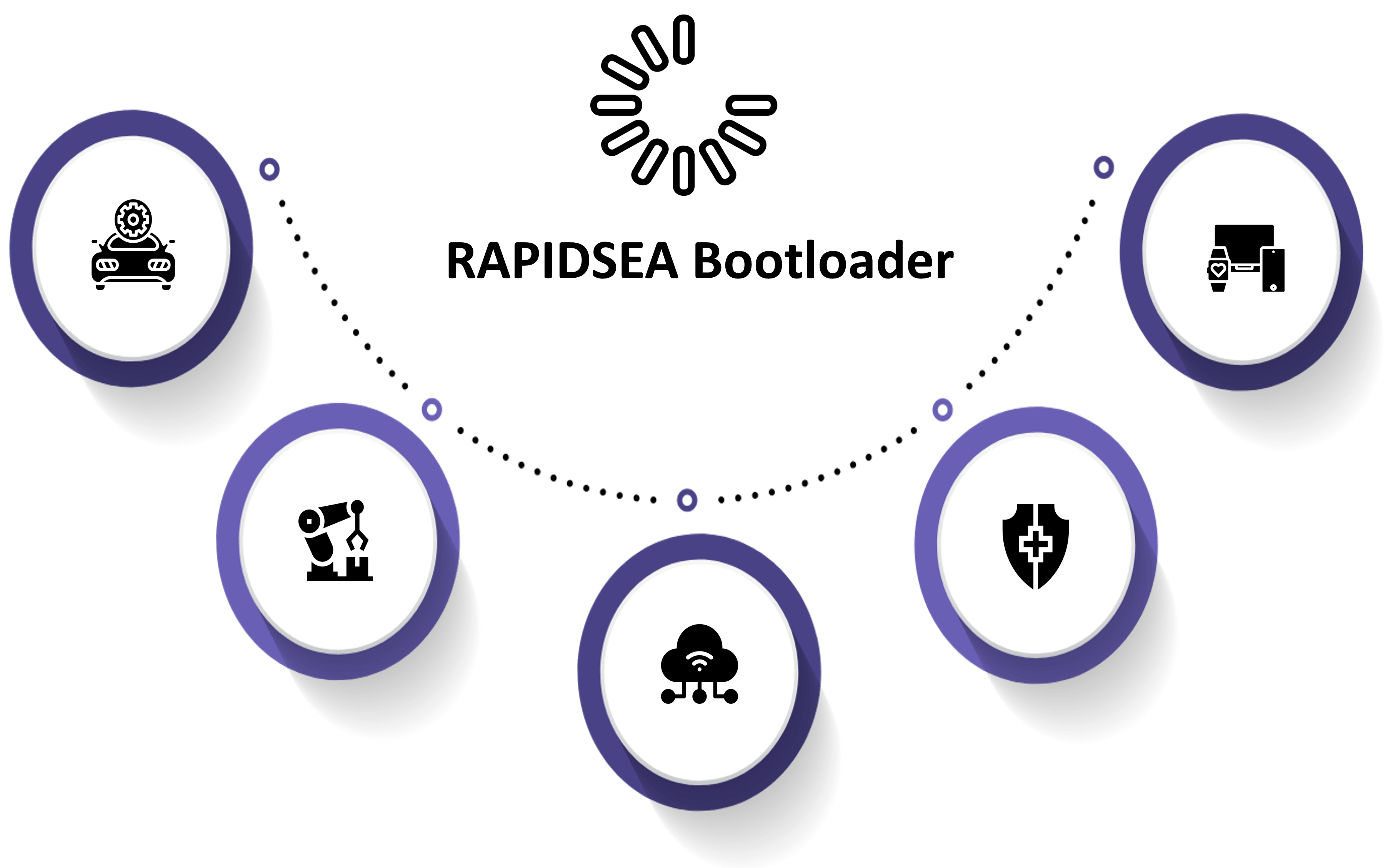
RAPIDSEA bootloader empowers manufacturers to manage firmware efficiently in embedded systems. Designed for automotive, industrial, consumer electronics, and medical devices, it handles everything from initial programming to ongoing updates.
Our solutions are used in high-stakes environments where reliability is key, especially in vehicle diagnostics, factory automation, and remote IoT monitoring. By choosing RAPIDSEA, you gain a modular system that adapts to your needs, ensuring your devices remain secure and up-to-date.
RAPIDSEA's Flash Bootloader is a highly optimized solution for reliable firmware updates in embedded systems. It supports protocols like CAN, CAN-FD, Ethernet, UDS, and more, making it ideal for automotive ECUs and industrial devices. Architectures include A/B redundancy, golden image backups, and PBL/SBL models for space-constrained setups. Security features like encryption (AES, RSA) and digital signatures prevent breaches. It integrates with AUTOSAR and non-AUTOSAR platforms, offering fast reprogramming with resume capabilities. Our Flint tool simplifies configuration, and the Windows-based update tool handles multiple file formats. Used in vehicles and factories, it ensures seamless ECU reprogramming without downtime.
Read moreRAPIDSEA's OTA Update Stack enables remote firmware, configuration, and AI/ML model updates for IoT and edge devices. It includes FOTA for full firmware patches, COTA for settings tweaks, and MOTA for model enhancements. Supporting Linux, Android, RTOS, and bare-metal platforms, it features rollback, error handling, and crypto-secured packages. Interfaces like Wi-Fi, LTE, CAN, and cloud integrations (AWS, Azure) make it flexible. Flint IDE aids package generation with models like A/B swap or golden copy. Proven over 15 years, it's reliable for defense, medical, and telematics applications. Eliminate physical access needs and boost device longevity.
Read moreRAPIDSEA bootloader offers domain-specific edges:
Overall, advantages include MISRA-compliant code, royalty-free licensing, and end-to-end support – setting RAPIDSEA apart in secure bootloader markets.

RAPIDSEA bootloader excels in real-world scenarios across industries. The following use cases highlight how RAPIDSEA addresses embedded bootloader challenges in dynamic environments.
ECU reprogramming for software upgrades in vehicles, ensuring compliance with safety standards.
Updating PLCs and gateways remotely to fix bugs or add features without halting production.
Secure OTA updates for smart home appliances, wearables, and sensors to patch vulnerabilities.
Firmware management in diagnostic tools, maintaining accuracy and security in healthcare.
Configuration tweaks in appliances like smart TVs or routers for optimal performance
Reliable updates in mission-critical hardware, with rollback for high-stakes operations.
A bootloader in embedded systems is the first software that runs after reset and initializes hardware, verifies firmware integrity, and safely launches the application. It enables secure startup and controlled firmware updates throughout the device lifecycle.