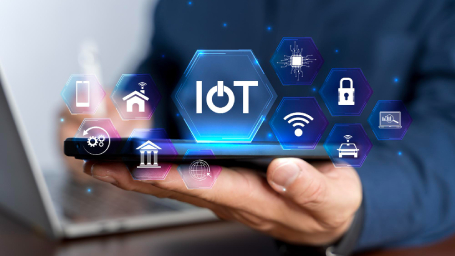
IoT protocol stacks are foundational layers of communication software that enable devices to connect, exchange data, and operate within the Internet of Things ecosystem. These stacks handle everything from data transmission to security, ensuring interoperability across diverse hardware and networks.
In today's connected world, IoT protocol stacks like BACnet, HTTP/2, and gRPC are essential for building reliable systems. RAPIDSEA’s solutions optimize these stacks for low-latency performance, making them ideal for smart cities, industrial automation, and more. By integrating our stacks, developers can reduce time-to-market while enhancing device efficiency.


BACnet is a communication protocol designed for building automation & control networks. RAPIDSEA BACnet stack enables seamless data exchange between HVAC systems, lighting controllers, energy meters, & others. The stack supports standardized object models, device discovery, & interoperable communication across multi-vendor building automation environments.

HTTP/2 is a modern application-layer protocol optimized for performance, efficiency, and reduced latency. RAPIDSEA HTTP/2 stack enables efficient device-to-cloud and service-to-service communication through multiplexing, header compression, and persistent connections, making it ideal for IoT gateways and cloud-connected embedded devices.

gRPC is a high-performance, cloud-native remote procedure call framework built on HTTP/2. RAPIDSEA gRPC stack enables structured, low-latency, scalable communication using strongly typed interfaces and efficient binary serialization, making it suitable for microservices-based IoT platforms, edge-to-cloud communication, and real-time data exchange.
RAPIDSEA stacks serve as the high-performance backbone for next-generation IoT ecosystems worldwide. Here is how our protocols are being deployed across industries to solve complex connectivity challenges:
Contact sales to learn moreIntegrating HVAC and lighting via BACnet into a unified dashboard for energy optimization.
Using gRPC for high-speed sensor data fusion and real-time machine-to-machine (M2M) coordination.
Utilizing HTTP/2 for secure, multiplexed transmission of patient vitals to telehealth platforms.
Deploying BACnet/IP for sub-metering and power quality analysis in large-scale utility deployments.
Implementing gRPC for low-bandwidth, high-reliability command and control of remote vehicle fleets.

Handle thousands of devices without performance degradation, ideal for expanding IoT networks.
Optimized protocols reduce data transmission times, enhancing real-time responsiveness in critical applications.
Minimize development time and resources with pre-built, customizable stacks.
Seamless integration across diverse hardware, simplifying multi-vendor ecosystems.
These stacks are designed for low-power devices, extending battery life in wireless IoT setups.
IoT protocol stacks are software implementations that define how IoT devices communicate reliably and securely across networks and platforms.