What Is gRPC?

gRPC (Google Remote Procedure Call) is an open, high‑performance RPC framework that allows applications to invoke functions on remote systems as if they were local. It is built on three foundational technologies:

  • Protocol Buffers (Protobuf): Compact, schema‑driven binary serialization
  • HTTP/2 Transport: Multiplexed, persistent, full‑duplex connections
  • Strong Interface Contracts: Clearly defined service APIs

For embedded and IoT systems, this translates into smaller payloads, deterministic performance, and long‑term interface stability; critical factors for production deployments with long device lifecycles.


Why gRPC Matters for Modern IoT Architectures

IoT systems have evolved far beyond periodic sensor uploads. Today’s deployments demand real‑time control, continuous data streaming, and intelligent cloud interaction, often across thousands or millions of devices. Traditional REST or polling‑based models struggle under these requirements.

gRPC introduces a service‑oriented communication model that enables IoT components to interact as if they were part of a single distributed system. With compact binary encoding and persistent HTTP/2 connections, gRPC minimizes latency, bandwidth usage, and processing overhead, making it ideal for both constrained embedded devices and high‑throughput cloud backends.

gRPC in IoT: Where RAPIDSEA Fits Best

RAPIDSEA gRPC is ideal for scenarios where performance, determinism, and scalability are non‑negotiable:
Device‑to‑Cloud

Device‑to‑Cloud RPC for configuration, diagnostics, and control

Edge‑to‑Cloud

Edge‑to‑Cloud data aggregation and command distribution

Service‑to‑Service

Service‑to‑Service communication inside IoT platforms

Digital twin synchronization

Digital twin synchronization and high‑frequency telemetry

Unique Advantages for IoT Development Teams

By combining gRPC with RAPIDSEA’s embedded‑first design philosophy, development teams gain:

  • Faster integration with cloud‑native ecosystems
  • Reduced firmware complexity and maintenance effort
  • Predictable performance on constrained MCUs
  • Long‑term API stability for products with 10-15 year lifecycles
  • A future‑proof communication layer aligned with software‑defined IoT

How gRPC Powers Your Systems

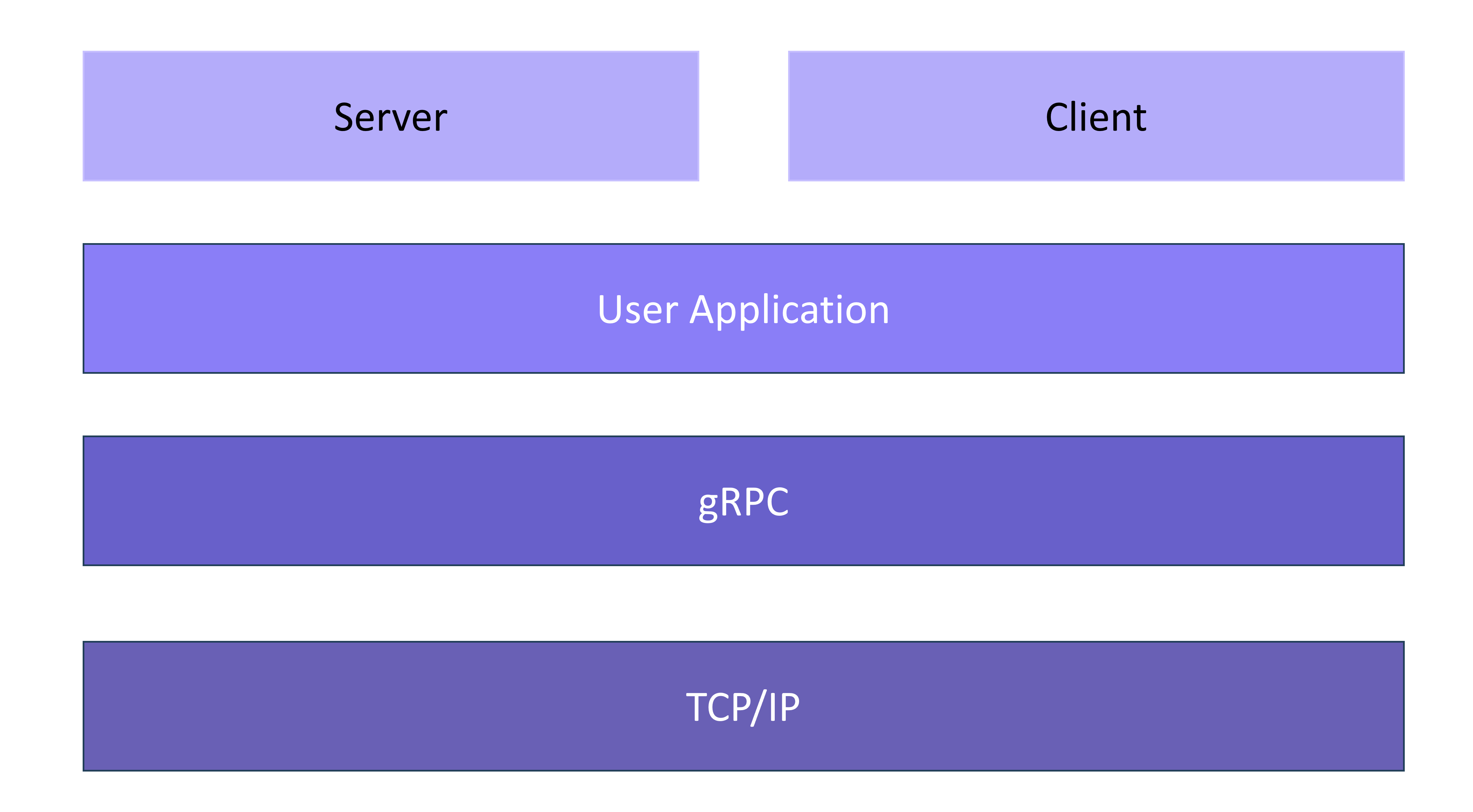
At its core, RAPIDSEA's gRPC operates through a structured client-server paradigm. Developers define services in .proto files, generating stubs and skeletons for effortless method calls. Data serializes via Protocol Buffers into binary formats, transmitted over HTTP/2 for multiplexed, low-latency streams. This enables features like deadlines, cancellations, and load balancing, making it ideal for scalable IoT. In practice, a device client invokes a remote method, processes the binary response, and maintains persistent connections; all while minimizing network strain in embedded environments.

Use Cases for gRPC Protocol Stack

RAPIDSEA’s gRPC stack enables high-performance, low-latency communication across a wide range of IoT and embedded scenarios where reliability, scalability, and real-time responsiveness are critical.
01
Industrial Automation

Low‑latency control and monitoring between machines, PLCs, and supervisory systems.

02
Smart Infrastructure

Real‑time coordination of distributed sensors, controllers, and cloud analytics.

03
Edge AI & Analytics

Streaming sensor data to edge or cloud inference engines with minimal overhead.

04
Cloud‑Native IoT Platforms

High-performance microservices communication within cloud-native backend environments.

05
Device Management & Diagnostics

Reliable remote procedure calls for firmware status, health monitoring, and updates.

FAQs

gRPC is a high-performance remote procedure call (RPC) framework that enables devices, edge systems, and cloud services to communicate using compact binary messages over HTTP/2. In IoT systems, gRPC is used because it delivers low latency, reduced bandwidth usage, and real-time bi-directional communication compared to traditional REST APIs.

Searching for Production-Ready gRPC for IoT?

RAPIDSEA provides an embedded-optimized gRPC stack built for real-world deployments.

For further information on how your personal data is processed, please refer to the Rapidsea Privacy Policy.